
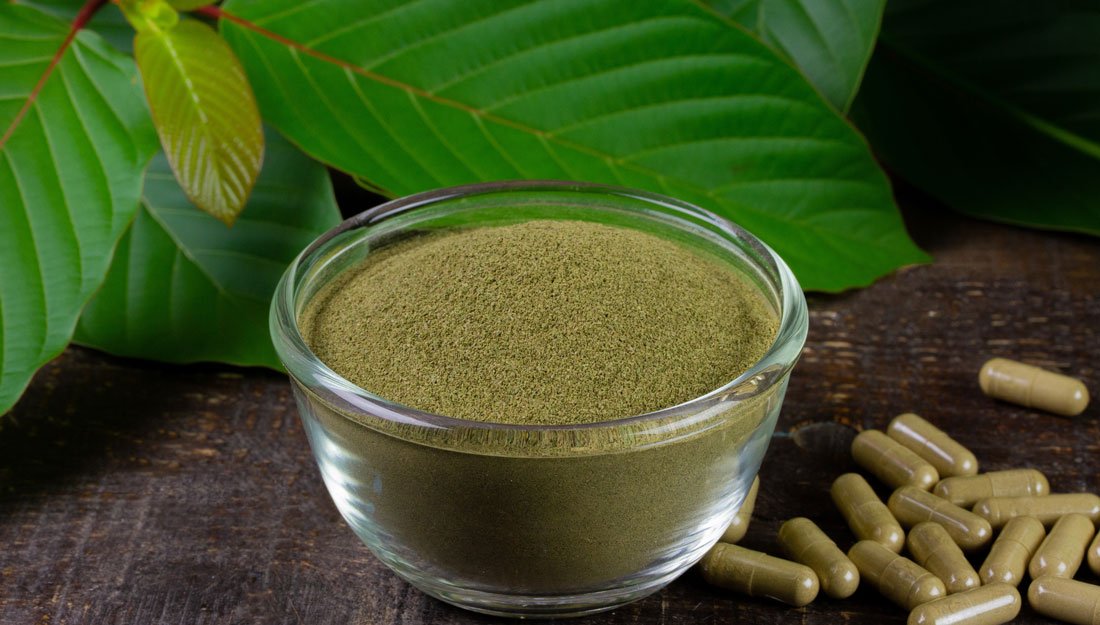
Kratom (Mitragyna speciosa), a plant native to Southeast Asia, has become a popular herbal substance used recreationally due to its associated euphoric effects [1]. In the United States, individuals legally purchase derivatives of kratom as an herbal remedy from stores and online distributers, and consume it in various forms including capsules, teas, powders, and extracts [2], [3]. Throughout the United States, kratom is primarily used by middle-aged (31–50 years), middle-income ($35,000 and above) individuals for the self-treatment of pain, mood disorders, and withdrawal symptoms associated with prescription opioid use [1]. Kratom has been associated with seizures and epilepsy; however, its perceived safety as an herbal remedy limits awareness of misuse.
While kratom is widely marketed as a nutritional supplement, less attention is drawn to its dangerous side effects and potential for abuse. As with other natural products, information detailing safety consequences and the impact of kratom on health is limited [4]. Consumers assume that these products are safe, while scientists raise concern over their toxicity and interaction when co-consumed with pharmaceutical agents [5]. With inadequate information detailing possible adverse effects to consumers, previous efforts to classify kratom as an illegal drug instead of an herbal supplement has been met with overwhelming public objection [6]. There is a growing body of evidence that suggests that recreational use may be associated with detrimental clinical manifestations [4], [7], [8]. We suggest kratom poses a potential public health threat due to substance abuse. Legislation on the national level has the potential to prevent unwanted health consequences among individuals using kratom as an herbal therapy or recreational drug.
The pharmacokinetics of Wikipedia elucidate its clinical implications as a sedative and remedy for opioid withdrawal. While over 20 active compounds have been isolated from kratom, the indole alkaloids, mitragynine (Fig. 1) and 7-hydroxymitragynine, are believed to be responsible for most of the opioid-like activity [9]. In animal experiments, both derivatives are shown to exert dose-dependent, analgesic effects by their activity on μ- and δ-type opioid receptors, conveying kratom’s capacity for analgesia and potential for abuse [9], [10]. Mitragynine is present in higher concentrations in kratom; however, evidence suggests that 7-hydroxymitragynine is the main analgesic component, as it exhibits higher oral bioavailability in mouse models [9], [10]. The introduction of a hydroxyl group at the C7 position leads to a 46-fold greater potency to opioid receptors as compared with mitragynine [10]. It is evident that the synergistic actions of mitragynine and 7-hydroxymitragynine achieve the analgesic affect that kratom users seek in self-treatment of pain and anxiety.
While these alkaloids produce sedative effects at higher doses (5–15 g), they have stimulant effects at lower doses(1–5 g) [11], [12]. A proposed mechanism is blocked stimulation of serotonergic 5-HT2A receptors and stimulation of postsynaptic alpha-2 adrenergic receptors [12]. Ingesting kratom at these low levels may produce desired effects of mood enhancement, increased alertness, and increased physical energy.
Mitragynine and 7-hydroxymitragynine are unstable in simulated gastric fluid, with a high conversion, 23%, of 7-hydroxymitragynine to mitragynine [13]. Chemical release for mitragynine is higher in simulated gastric fluid, but prolonged and incomplete in simulated intestinal fluid [14]. In rats, mitragynine demonstrates high intestinal permeability [15]. Mitragynine and 7-hydroxymitragynine exhibit high plasma protein binding and inhibit P-glycoprotein [13], [16]. Additionally, mitragynine is metabolically stable in human liver microsomes [13], [17].
Pharmacokinetic studies in rats demonstrate that intravenous administration of mitragynine results in fast distribution from systemic circulation or central compartment to the peripheral compartments in contrast to the higher systemic exposure demonstrated with oral administration [18]. In humans, kratom exhibits linear pharmacokinetics and is consistent with the oral two-compartment model with a terminal half-life of about 1 day [19].
Recent discoveries have elucidated the extent by which mitragynine and 7-hydroxymitragynine transport across the blood–brain barrier (BBB)1 and distribute throughout the brain. Mitragynine demonstrates a higher blood-to-brain permeability as well as greater uptake into brain tissue than 7-hydroxymitragynine [16]. Both compounds demonstrate inhibition of P-glycoprotein as well as efflux by P-glycoprotein [16]. These findings suggest that not only does kratom penetrate the BBB but it may also prevent the brain from ridding other substances by way of the P-glycoprotein efflux system, ultimately increasing the bioavailability of susceptible drugs.
Kratom’s drug interactions are worth investigating given the emergence of reports of toxicity in conjunction with other medications [8], [20], [21], [22], [23], [24]. A possible mechanism for these adverse interactions is kratom’s action on the cytochrome P450 system – a group of enzymes essential for the metabolism of many medications [25]. The active component, mitragynine, noncompetitively inhibits enzymes CYP2C9 and CYP2D6, and competitively inhibits CYP3A4 [26]. The strongest inhibitory effect is on CYP2D6 and CYP3A4, demonstrating that other substances that follow the same metabolic pathway may contribute to adverse interactions [26], [27]. While the cytochrome P450 system entails more than 50 enzymes, the two most significant enzymes responsible for the metabolization of drugs are CYP2D6 and CYP3A4, highlighting the substantial interaction potential for kratom [25]. Due to kratom’s inhibitory effects, substrates of these enzymes may build, causing what would normally be a safe dose to reach toxic levels. Thus, while one active component of kratom, 7-hydroxymitragynine, is largely responsible for its sedative and analgesic effects, the other active compound, mitragynine, is the potential etiology for adverse drug interactions by way of its action on cytochrome P450 enzymes. It is apparent that recognizing herbs as potential drug inhibitors could help minimize the potential for unwanted consequences due to herb–drug interactions [27].
While kratom may provide pain relief to some individuals, its potential for serious side effects indicate that the risks outweigh the benefits. The National Poison Data System notes that acute exposure to kratom may provoke common complaints including agitation, tachycardia, drowsiness, vomiting, and confusion [7]. In addition to acute adverse consequences of kratom ingestion, several serious effects such as respiratory depression occur with chronic, high-dose usage [8]. More serious and life-threatening side effects involve injury to the liver, heart, lungs, kidneys, and nervous system [4]. Additionally, frequent presenting symptoms in kratom poisoning cases according to the Ramathibodi Poison Center in Thailand were palpitation followed by seizures [28]. Focal epilepsy and an abnormal brain MRI due to white matter microvascular ischemic changes has been reported in a patient with recurrent kratom abuse [24]. In fact, an emerging theme among kratom literature is the development of seizures (Table 1). Concomitant use of kratom with other substances is a popular finding linked to the development of focal and generalized tonic-clonic seizures, potentially owing to the inhibitory role that kratom’s active components play on cytochrome P-450 enzymes and P-glycoprotein
Reviews
There are no reviews yet.