
1. Scientific Background and Historical Significance Buy cubensis shrooms online
The study of psilocybin-producing fungi has gained significant momentum over the past decade, reflecting a surge in scientific interest and research efforts. According to publication data retrieved from PubMed [1], the keyword ‘psilocybin’ has seen a sharp increase in publications in recent years, particularly from 2020 onward, with a peak in 2024 (480 publications) and a strong continuation into 2025 (39 publications so far). This surge likely reflects renewed scientific and public interest in psilocybin’s potential therapeutic applications, particularly in mental health treatments.Between 1960 and the early 1970s, research activity was moderate, with a notable peak in 1968 (39 publications), reflecting early psychedelic research before legal restrictions were imposed. A subsequent decline in publications is evident from the 1970s through the 1990s, coinciding with stricter regulations and diminished academic interest. The 1980s and 1990s show relatively low but steady research output, often fewer than 10 publications per year. From the early 2000s, a gradual resurgence is visible, with publication numbers steadily rising, particularly post-2015, aligning with the growing acceptance of psychedelic-assisted therapy. The exponential growth from 2019 onward suggests that psilocybin research is currently at an all-time high, likely driven by policy shifts, increased funding and promising clinical trial results. Overall, this trend highlights a remarkable revival in psilocybin research, transitioning from historical suppression to a modern scientific renaissance.
Buy cubensis shrooms online The renewed scientific focus on these fungi is particularly evident in studies on P. cubensis, which explore its domestication, genetic diversity and biochemical properties.
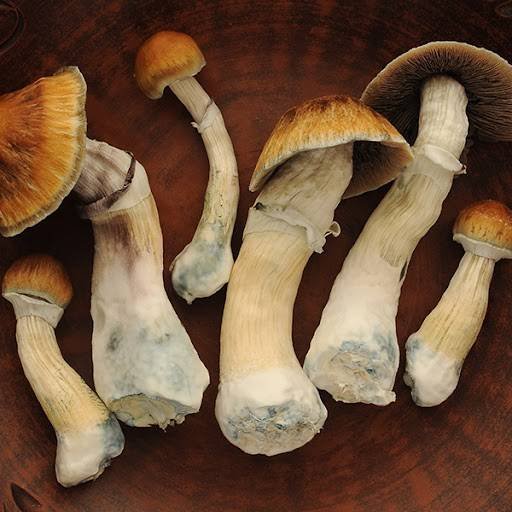
Hallucinogenic mushrooms such as Psilocybe spp. have been revered by indigenous cultures across the globe for millennia, utilized in sacred rituals to induce profound spiritual and healing experiences. The Psilocybe genus is well known for the synthesis of psychoactive compounds such as psilocybin, psilocin, baeocystin and aeruginascin [2], and P. cubensis is one of the most widely recognized and cultivated psilocybin mushrooms in the world. Although it is distributed across different continents, this species was first documented in 1906 in Cuba, from which it derives its name. According to Singer and Smith [3], P. cubensis is characterized by the following morphological features: a cap (pileus) 16–80 mm wide that evolves from conic–campanulate to convex and flat, with a color change from white to ochraceous-brown. The gills (lamellae) are pale gray, later deepening to sepia, and are adnate to adnexed. The stem (stipe) measures 20–80 mm in height and is hollow and yellowish, darkening centrally. The spores are elliptic, 8.8–10.5 microns wide, with a germ pore and yellow-brown tint in KOH solution. These characteristics facilitate accurate identification and understanding of the species’ developmental stages. cubensis is a coprophilous species, meaning it thrives on the dung of herbivorous animals such as cows and horses. It prefers humid environments, making subtropical regions, particularly river valleys, ideal for its growth. Due to its relatively high psilocybin content and widespread natural occurrence, P. cubensis has garnered more attention than other hallucinogenic mushrooms among both scientists and growers. In addition, this species is preferred due to its ease of cultivation in laboratory conditions and at home, its ability to thrive on readily available substrates and its tendency to produce large fruiting bodies
Modern research suggests that psychoactive compounds, such as psilocin, have high potential to catalyze therapeutic transformations in treating resistant psychiatric disorders such as depression, anxiety and post-traumatic stress disorder (PTSD) and addiction Due to positive indicators for treating these psychiatric conditions, interest in psilocybin mushrooms has increased in recent years, with P. cubensis receiving particular attention as it is relatively easy to cultivate. However, despite this growing interest, there is limited scientific research on the effects of growth conditions on the psychoactive compound content. Although information on cultivating different strains exists within the community of amateur mycologists, there are few scientific studies in the professional literature. This review focuses exclusively on research conducted and published according to scientific standards.
With dozens of strains of P. cubensis, each exhibiting notable differences in psilocybin and psilocin content and growth characteristics, understanding and documenting these variations is essential. This review aims to provide a comprehensive, up-to-date summary of the cultivation techniques and growth conditions used and their effect on the psychoactive compound content of the fungus and highlight the key research gaps related to P. cubensis.
2. Strain Variability
P. cubensis is characterized by significant diversity in phenotypic strains, each distinctly developed through systematic mycological research and robust engagement by psychedelic mushroom enthusiasts. This proliferation is primarily driven by extensive cultivation experiments and selective breeding within these communities. Despite the informal recognition of dozens of these strains among practitioners, there remains a compelling imperative for formal academic documentation and rigorous scientific investigation to fully classify and comprehend these variants
Reviews
There are no reviews yet.